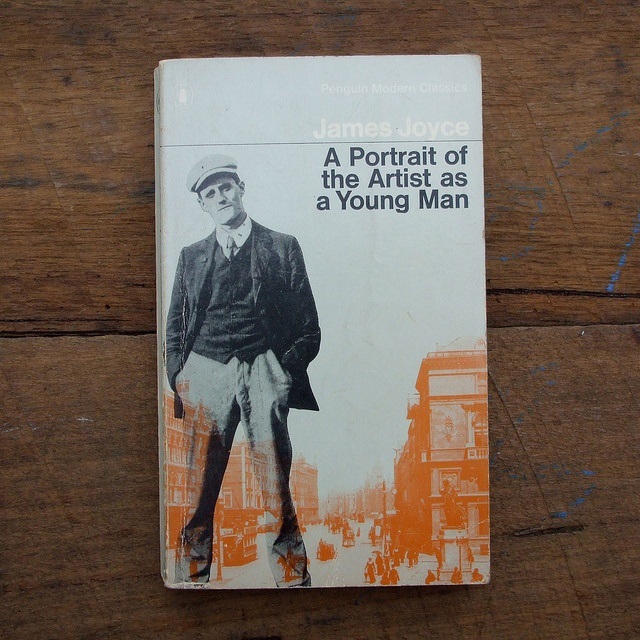
Joyce’s A Portrait of the Artist as a Young Man traces Stephen Dedalus from a curious child to a young man who begins to claim his artistic longing. This isn’t a straight‑line coming‑of‑age tale. Instead, it’s a portrait of a mind shape itself under pressure—the weight of family, school, and church squeezing in as Stephen tries to speak his own truth in a language that fits. For readers who want books that feel like talking to a mind, Joyce’s inner landscape is more than literature—it shows how consciousness works.
Technique and Function: Stream-of-Consciousness as Method
Joyce’s hallmark here is stream of consciousness, but not a flashy parade of thoughts. It is an active mind trying to set its own purpose. The narrative slips into Stephen’s perception in increments: sensory details, memories, quick judgments, then reflective reorganization. This technique serves two crucial functions:
- First, it dramatizes Stephen’s inner life—his fears, curiosities, and stubborn push toward autonomy—so we feel intimately connected to his struggle.
- Second, it provides a compact framework for a larger argument: art as a vocation can be both a personal salvation and a disruptive force in a life shaped by external pressures. The tension between inward truth and outward expectation drives the novel’s emotional charge and thematic clarity.

Analysis with Examples: Two Brief Quotes Analyzed
- Quote 1: “I will not tell her I am afraid; I will tell myself I am strong.” This line isn’t a thunderous manifesto; it’s a private rehearsal. It shows how Stephen’s self-talk is a practical step toward self‑authoring, not a fleeting mood. Joyce uses this interior vow to demonstrate how consciousness shapes motive and turns emotion into identity.
- Quote 2: “A mild young man, a cousin to my own mind, I would be, perhaps.” This line marks a subtle but pivotal turn from imitation to intention. It isn’t an oath of rebellion but a calculated alignment of self-image with emerging artistic aims. The diction is restrained, and the moment signals that Stephen is starting to legislate his own purpose rather than absorb others’ expectations.
From Childhood to Young Adulthood: The Social Pressure Spectrum
The novel is structured as a gradual negotiation with social forces—family authority, Catholic doctrine, and the schooling machine—that could easily drown a child’s inner voice. Joyce’s stream of consciousness makes these pressures feel tactile and immediate, not abstract. When Stephen faces a church ritual, a bell, or a teacher’s demand, the prose often slows into rhythm that resembles a chant—mirroring how social forces imprint themselves on a developing mind. The inward conflict—love of family, respect for tradition, and the lure of a personal artistic path—becomes a dialogue, not a monologue. This dynamic push‑pull is what renders Stephen feel authentically grounded: a real person wrestling with the same human questions we all confront, just under a more intense spotlight.
A Moment of Clarity within Confusion
As Stephen’s awareness grows, the text moves toward a firmer sense of vocation. The hours of doubt give way to a stubborn conviction that art will organize his world. Joyce’s language slows, then briefly expands, to reflect a mind settling on a single vocation amid competing loyalties. This isn’t a single coup of realization; it’s a patient re‑charting of purpose. Critically, we witness how an inner decision can transform daily life from noise into a meaningful project, a process that feels both universal and deeply particular to Stephen’s temperament.
Closing: Joyce’s Portrait as a Study of Consciousness
Joyce’s portrait isn’t merely about a boy growing into an artist; it demonstrates how consciousness can be analyzed and understood in literary form. If you’re looking for a rigorous yet readable exploration of how a mind shapes itself—through missteps, flashes of clarity, and a steadfast chase after art—this Joyce classic hits the mark.
1 thought on “Into the Self: Joyce’s A Portrait of the Artist as a Young Man Revisited”